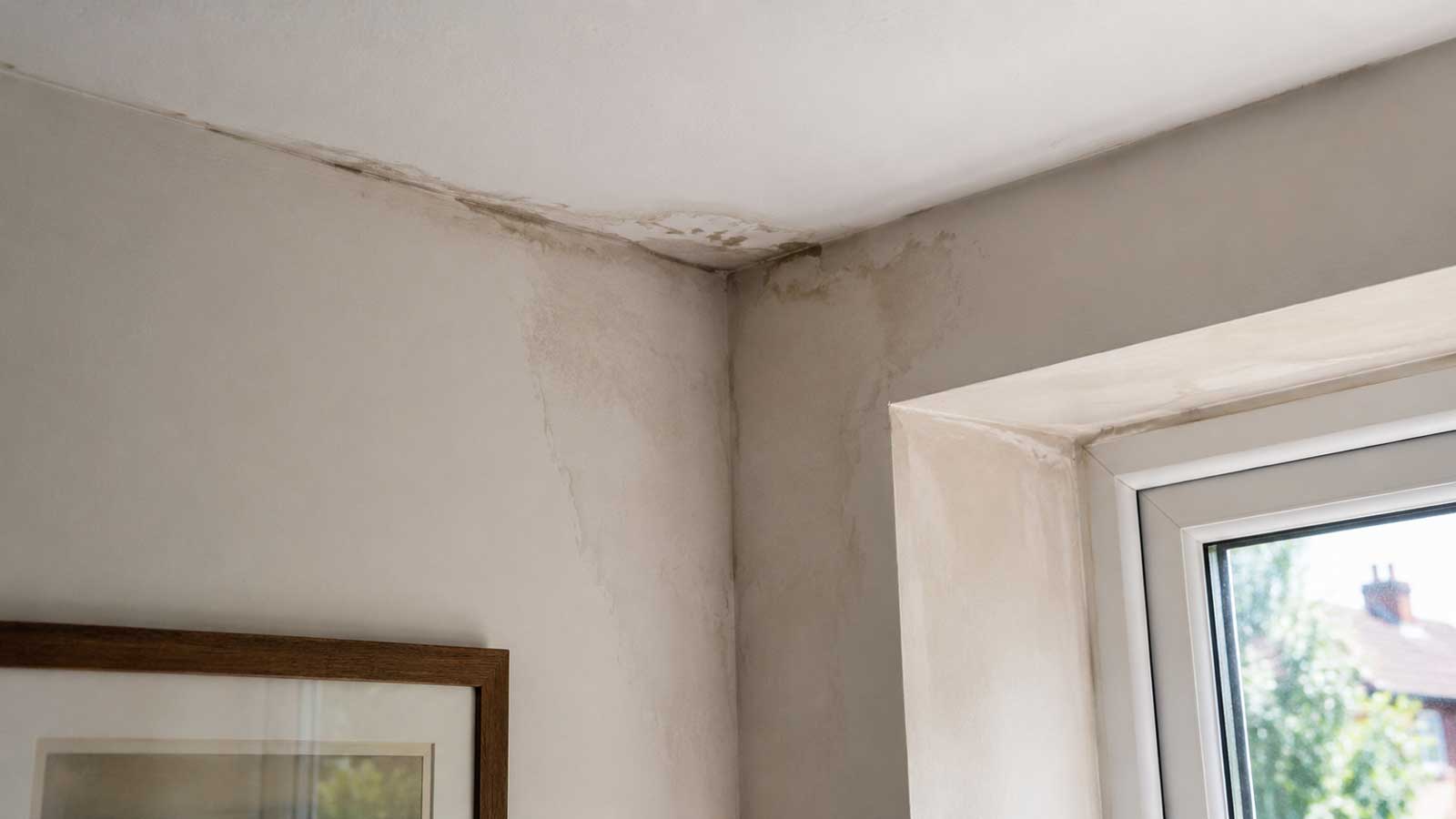
Colour can mislead
Old roof timbers often have dark staining from historic leaks, soot, dust or previous condensation. A dark rafter can be perfectly hard. What matters is present moisture and condition.
If you can reach the timber safely from boarded loft space, look for softness, surface fungal growth, splitting around fixings and fresh water marks. Do not start prodding structural timber with a screwdriver simply to see what happens.
Trace the damp uphill
On a sloping roof, water can track down a rafter. Follow staining upwards towards the ridge, chimney, valley or roof covering. Wetness concentrated at the eaves may come from a gutter or failed underlay rather than an opening directly above.
Around chimney breasts, check both the roof junction and the masonry.
Timber decay needs sustained moisture
Decay fungi require suitable moisture conditions. Once the water source is corrected, timber condition can be assessed properly. Some sections may dry and remain serviceable; genuinely decayed structural timber may need repair or replacement.
Treating the surface without stopping the wetting is poor use of money.
After the roof is repaired
Do not expect old staining to vanish. Take dated photographs and, if necessary, moisture readings so you can see whether the area is drying.
Ventilation and normal heating below can influence drying time. If timber remains wet despite dry weather and a completed roof repair, recheck for plumbing, condensation or a missed route.