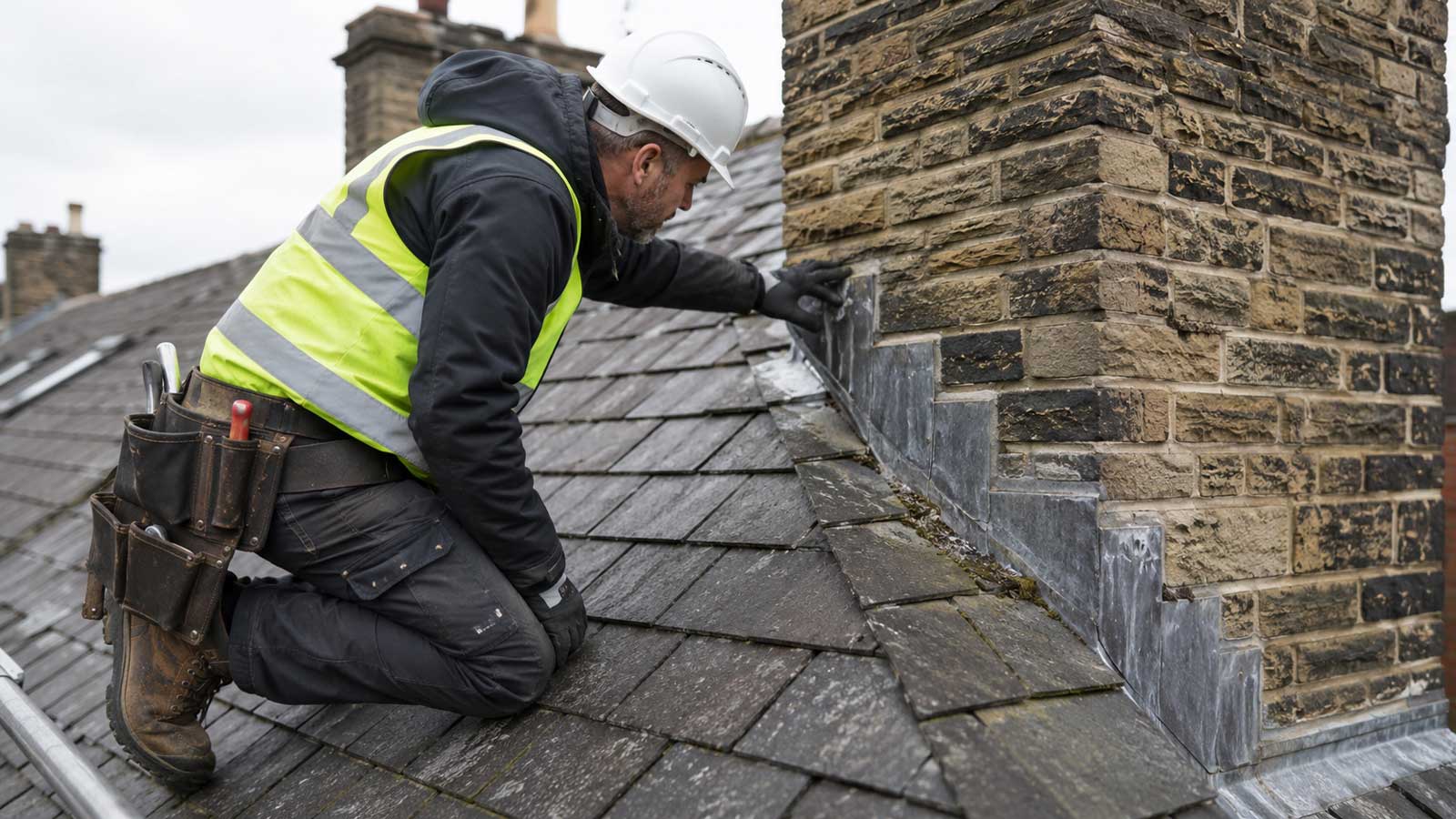
From outside
Stand back far enough to see the roof plane. Look for pieces out of line, obvious gaps, damaged ridge or verge material, overflowing gutters and vegetation in valleys. Check chimneys for open pointing or leaning pots that can be seen safely.
Walk around the other side if access allows. Many defects are invisible from the front.
From the loft
Use boarded access only. Look for fresh staining, damp insulation, wet rafters and daylight at unexpected points. A tiny amount of light at eaves ventilation is normal on some roofs, so light by itself is not proof of a hole.
After rain, fresh moisture is more informative than old marks.
Photograph the area before work starts if you can do so from a safe position. It gives you something concrete to compare with the finished repair.
After strong weather
Wind, snow and prolonged rain can expose different weaknesses. Check the ground and gutters for fallen slate, tile or mortar fragments.
Photograph the roof from the same safe viewpoints occasionally. Small changes are easier to see when you can compare images.
What not to do
Do not walk on tiles or slates to inspect them. Avoid leaning out of windows, climbing wet ladders or lifting roof coverings without understanding how they are fixed.
If something looks wrong but cannot be identified from safe positions, that is the point to arrange a closer inspection.
Need somebody to look at the roof?
If you want to ask local contractors about the repair, describe the symptom and include anything you have noticed about the weather or the part of the roof involved.
Request roofing quotesQuote requests are provided by MyJobQuote, an independent third-party service.