Low does not mean simple
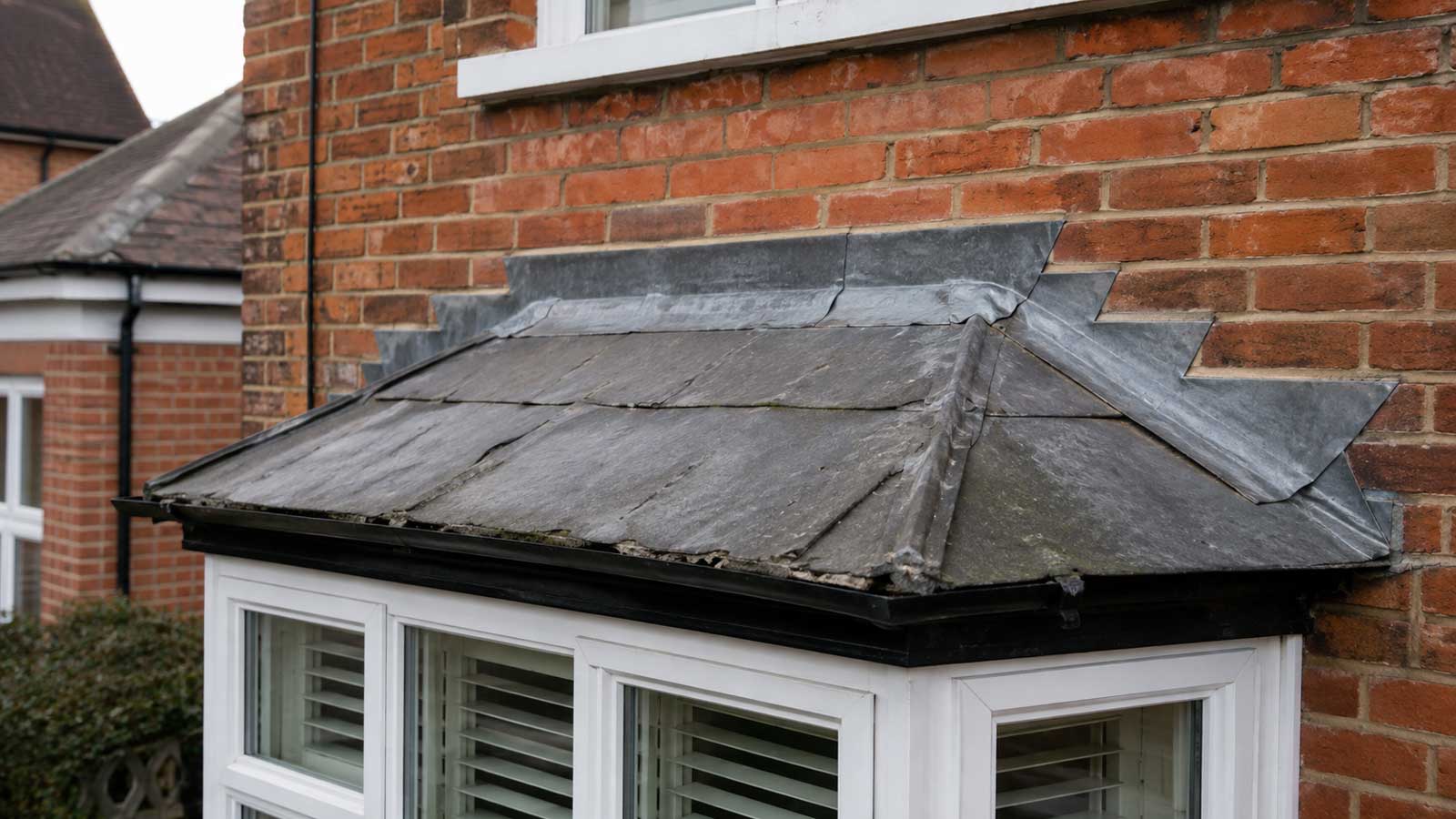
Because a bay roof is close to the ground, people often assume the repair will be easy. Access may indeed be simpler, but the construction can be fiddly. Lead, felt, asphalt or modern membranes may all be found, sometimes after several generations of patching.
The wall above the bay should be included in the inspection.
Corners and back edges
Leaks frequently develop where the roof turns up against the wall or around a corner. Small outlets can block with leaves. On lead bays, splits may form at folds or where sheets are too large to move freely.
If a bay has decorative stonework above it, check joints and drips there too.
Do not coat over everything
Liquid coatings are sometimes used as a quick answer. They can be useful in the right system, but spreading coating over failed joints, damp substrates and loose previous material makes the detail hard to inspect later.
The preparation and compatibility of the surface matter.
Interior staining
Water can appear at the junction between ceiling and external wall even though the entry point is several inches away. Window frames and masonry above can also feed moisture to the same area.
A hose test can occasionally assist diagnosis when used carefully by an experienced person, testing one area at a time. Randomly soaking the whole bay proves very little.