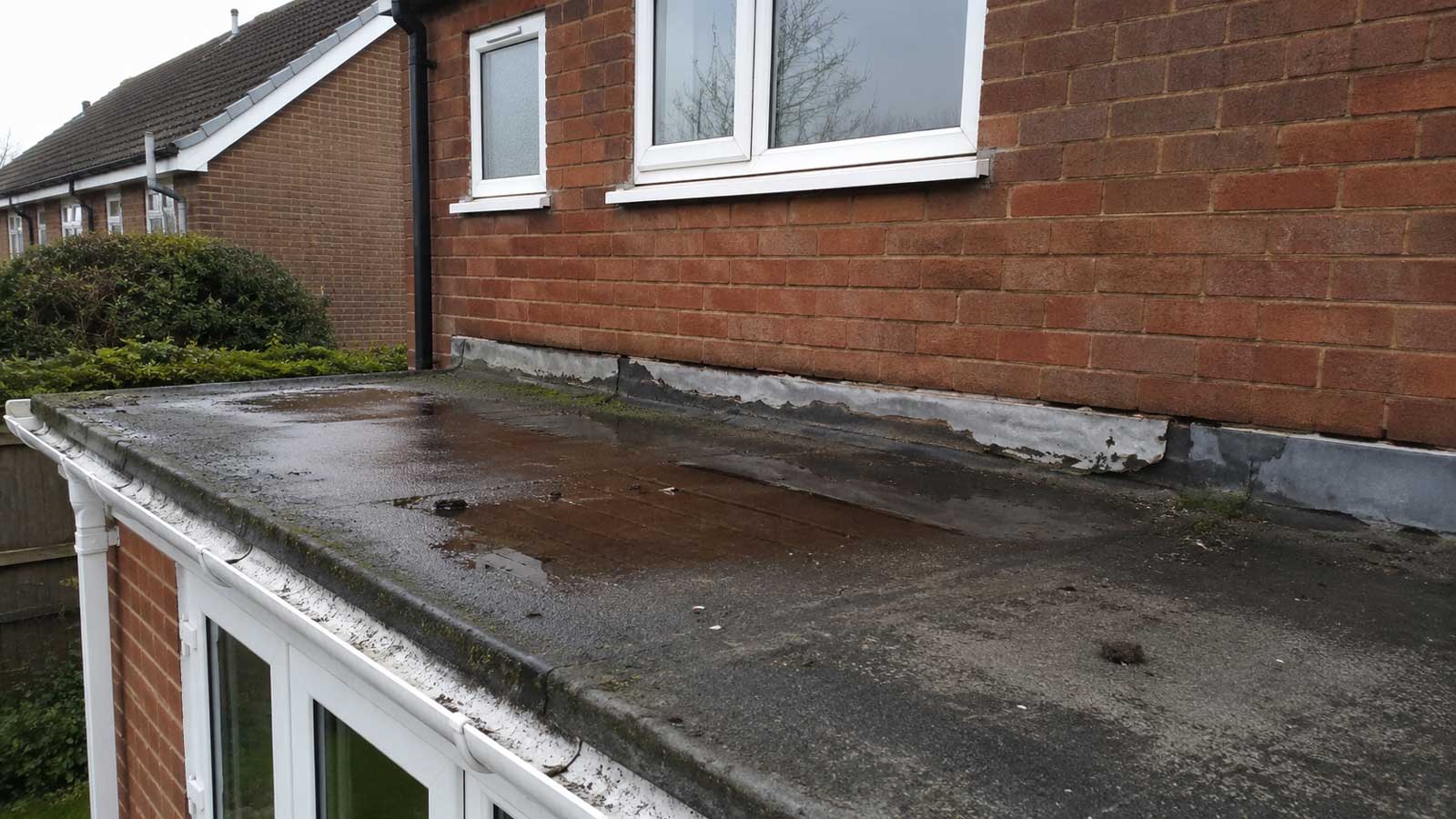
The wall junction comes first
Where an extension roof meets the house, rain must be turned away from the wall and onto the new roof covering. Step flashings, cover flashings or proprietary details may be used depending on construction.
Cracks in render above the flashing can admit water behind an otherwise sound roof. The inspection should therefore include the wall, not stop at the tiles.
Different roofs move differently
A newer extension and an older house do not always move or settle in exactly the same way. Small cracks can open at rigid junctions. Timber roofs also expand and contract with moisture and temperature.
Flexible details are used for a reason. Filling every visible line with hard mortar can simply move the crack elsewhere.
Low pitches need correct coverings
Some tiles have minimum pitch requirements. On a shallow extension roof, a covering used below its suitable pitch can be vulnerable to wind-driven rain even if nothing is obviously broken.
Measure the pitch if the leak has been present from early in the life of the extension. Repeated small repairs may otherwise miss a design problem.
Internal position can be deceptive
Water may travel along the top of a beam or plasterboard before showing. If the stain is close to the old external wall, inspect both the roof-to-wall junction and anything above it such as windowsills, render cracks or pipe penetrations.
Photographs during heavy rain can sometimes show an external run that has disappeared by the time a roofer arrives.