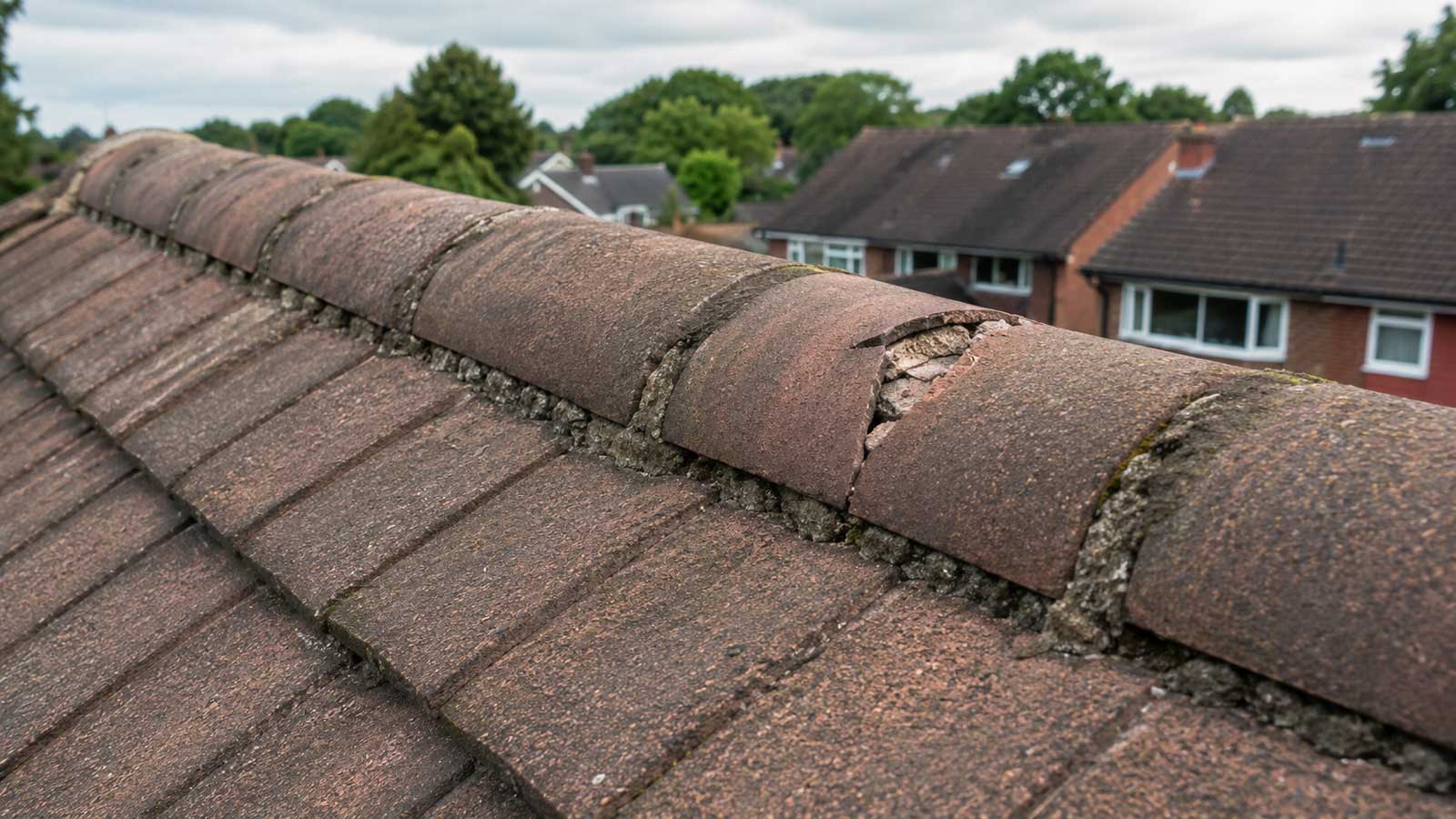
Mortar-bedded ridges
Traditional ridge tiles were commonly bedded and pointed in mortar. With age, the mortar can crack, loosen from the tile or break away in sections. One obviously loose ridge may sit beside others that are still firm.
When local rebedding is suitable, the failed material needs removing so the new mortar has something sound to bond to. A thin smear over old loose mortar tends to be short-lived.
Dry-ridge systems
Modern dry-ridge systems use mechanical fixings rather than relying on mortar. A displaced section may result from a missing screw, damaged connector or poor original installation. The fix should restore the mechanical restraint rather than adding mortar around a system designed to work without it.
Check the manufacturer's arrangement if components can be identified.
Wind exposure
The ridge is one of the most exposed parts of a pitched roof. After strong winds, look from ground level for a tile sitting proud, a visible gap or fragments of mortar on the ground. Do not stand below a visibly unstable ridge.
If several sections have failed, ask for the full ridge line to be checked while safe access is in place.
Water at the apex
A ridge defect can admit rain near the highest point of the roof, after which it may travel down rafters before appearing. In a loft, inspect around the ridge board and upper rafters after rain if access is safe.
Old staining alone does not prove the ridge is currently leaking. Fresh dampness or a clear external defect carries more weight.