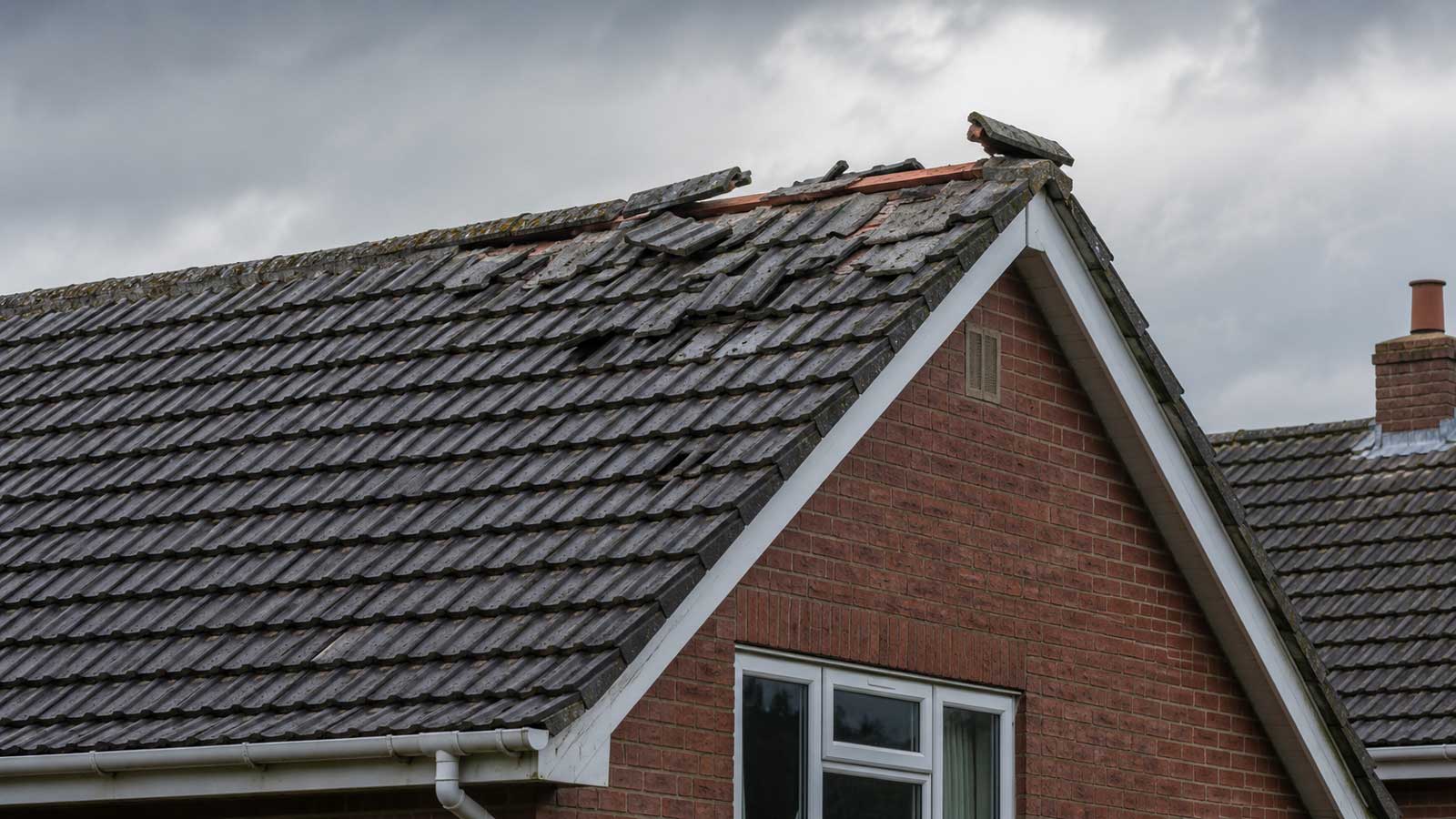
Check without climbing
Walk around the property from safe ground. Look for missing or displaced slates, ridge tiles out of line, pieces in gutters, damaged verge material and debris in the garden. Binoculars or a phone camera zoom can help.
Do not climb onto a roof after high winds. Loose coverings and wet surfaces make an already risky job worse.
Temporary protection
If water is entering, protect the room below and move belongings. A contractor may be able to make the roof temporarily weather-tight before a full repair, particularly if matching materials or scaffold are not immediately available.
Ask what is temporary and what is intended as the final repair. The two should not become confused once the weather improves.
Photograph the area before work starts if you can do so from a safe position. It gives you something concrete to compare with the finished repair.
Wind can expose older weakness
A slate that slips during a storm may have had a corroded fixing for years. Ridge mortar can already be detached before the piece finally moves. The weather event explains when the defect became visible, not always why the material was vulnerable.
Check the surrounding area while access is available.
Keep a simple record
Photograph visible damage before it is disturbed, provided you can do so safely. Keep the contractor's photographs and invoice describing the work carried out.
Even when the job is modest, a clear record helps if a different problem later appears in the same area.
Need somebody to look at the roof?
If you want to ask local contractors about the repair, describe the symptom and include anything you have noticed about the weather or the part of the roof involved.
Request roofing quotesQuote requests are provided by MyJobQuote, an independent third-party service.