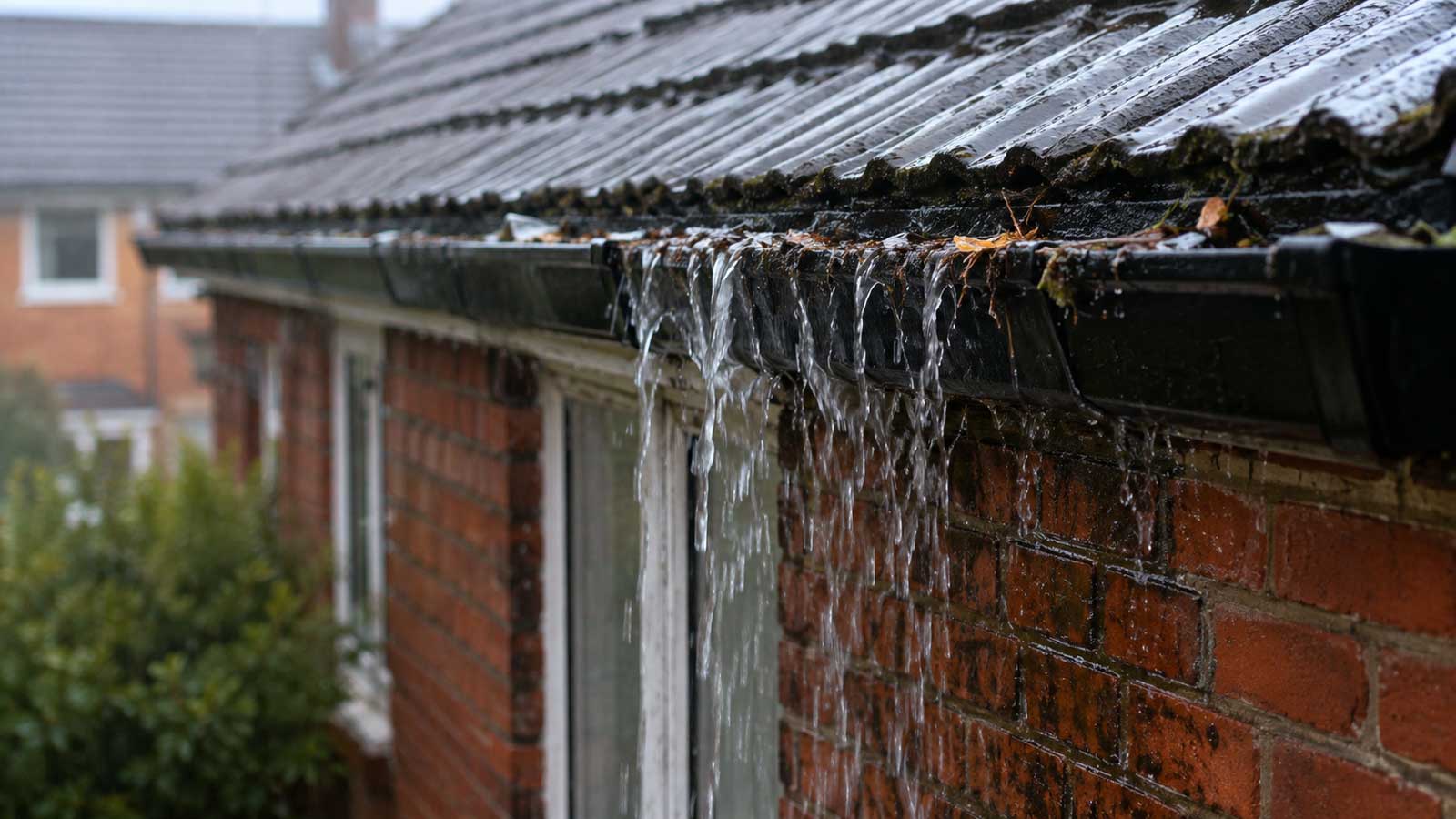
Watch what happens during rain
A gutter can overflow because it is blocked, because it falls the wrong way, because the outlet is restricted, or because the roof discharges more water into one short section than it can carry. If possible, watch from a safe place during proper rainfall. Where the water first spills is useful information.
Leaves and moss often collect near outlets. A short blockage there can back water up for several metres. On terraced houses, shared or closely connected drainage arrangements can also make the source less obvious.
The back of the fascia matters
Overflow is not always visible at the front. Water can get behind a gutter, wet the fascia and run down the wall. If old roofing felt ends behind the fascia, it may sag and form a shallow trough. Water from higher up the roof can then collect there and discharge against the back of the timber.
That is one reason a rotten fascia should not automatically be treated as a joinery problem. The source may be further up the roof.
Cleaning is only part of the job
After debris is removed, water should run towards the outlet without sitting in long sections. Joints and stop ends need checking for drips. Brackets can loosen or distort, leaving a dip that holds water.
An undersized or badly positioned outlet may cope in light rain and fail during a downpour. If overflow keeps returning soon after cleaning, looking at the fall and discharge route is more useful than cleaning it again.
Signs on the wall
Green staining, washed-out pointing, peeling paint and dampness near the top of an external wall can all follow repeated gutter overflow. The wall may remain wet long after the rain stops.
Repair the drainage first, then allow the wall time to dry before deciding how much internal or external making-good is needed. Otherwise new decoration can hide the symptom for a short while without changing the cause.