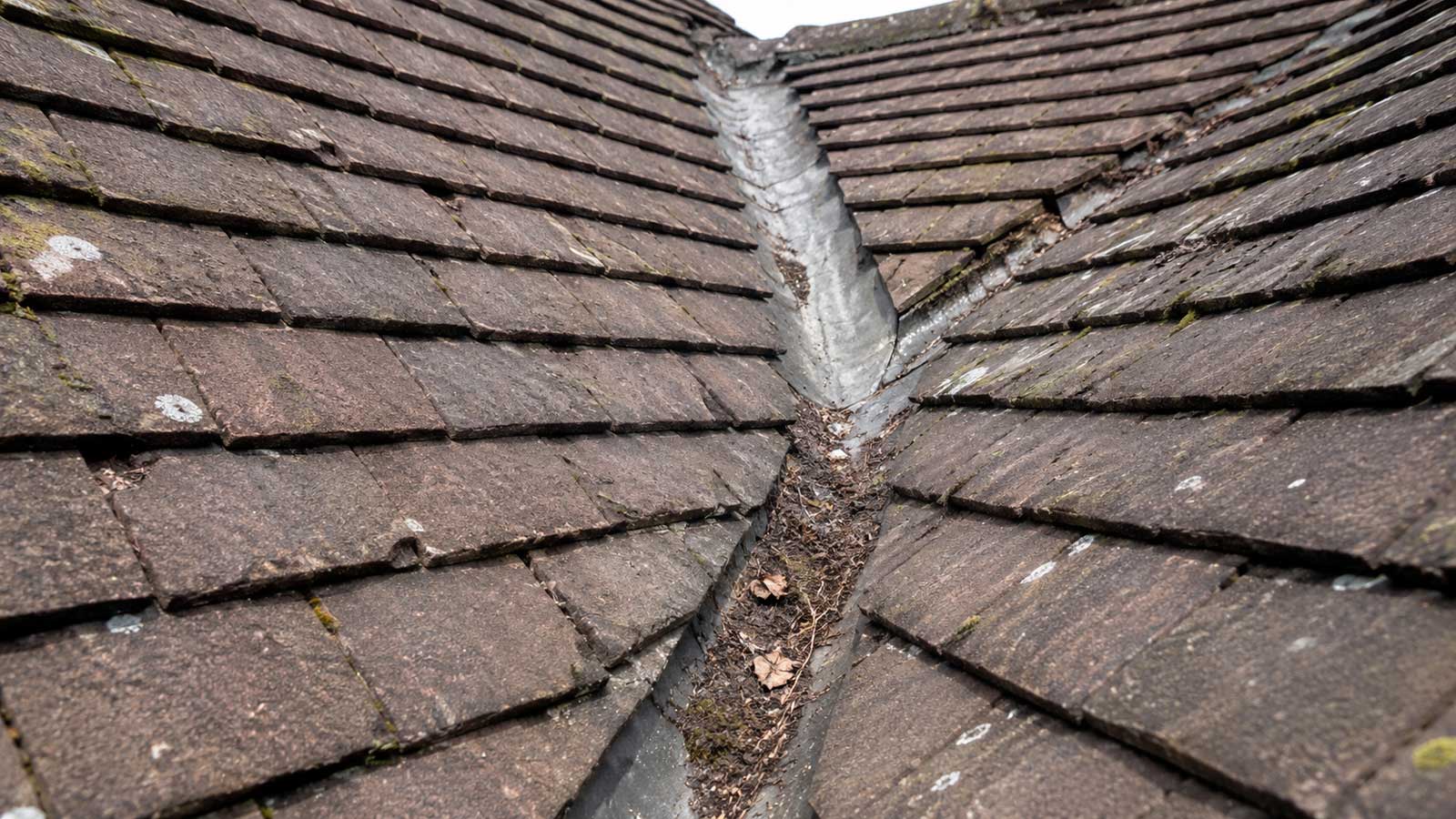
Why valleys get blamed quickly
A valley sits at the meeting of two roof slopes and collects water from both. When a ceiling below that junction becomes wet, the valley is an obvious suspect. Often it is the right place to look, but the fault might be higher up where tiles meet the lining or where a small piece has slipped.
Leaves, moss and fragments of mortar can slow the flow and hold moisture against laps. Clear debris carefully before deciding the lining itself has failed.
Different valley constructions need different repairs
Older roofs may have lead valleys, while other roofs use preformed channels or tiled details. Lead can split where movement has been restricted or where a long run lacks suitable joints. Cement fillets beside a valley can crack and loosen. Tiles cut too short may leave the edge vulnerable during driven rain.
A repair should suit the existing construction. Covering a long section with liquid coating can hide the detail without correcting poor laps or movement.
Photograph the area before work starts if you can do so from a safe position. It gives you something concrete to compare with the finished repair.
Look uphill
Water seen at the bottom of a valley may have entered near the top. The junction beneath a ridge, dormer or adjoining roof can be especially awkward. A roofer should trace the route rather than beginning at the lowest damp point.
From inside the loft, dark staining on valley boards can help show how long the problem has been present. Fresh wetness after rain is more useful than old staining alone.
Access changes the price
Valleys are often central on the roof and harder to reach than a tile near the eaves. Safe access may involve a roof ladder, tower or scaffold depending on height and layout. That can make a small-looking defect more expensive than the materials suggest.
Ask for the access method to be included in the quote. It avoids confusion later about whether scaffolding is extra.
Need somebody to look at the roof?
If you want to ask local contractors about the repair, describe the symptom and include anything you have noticed about the weather or the part of the roof involved.
Request roofing quotesQuote requests are provided by MyJobQuote, an independent third-party service.