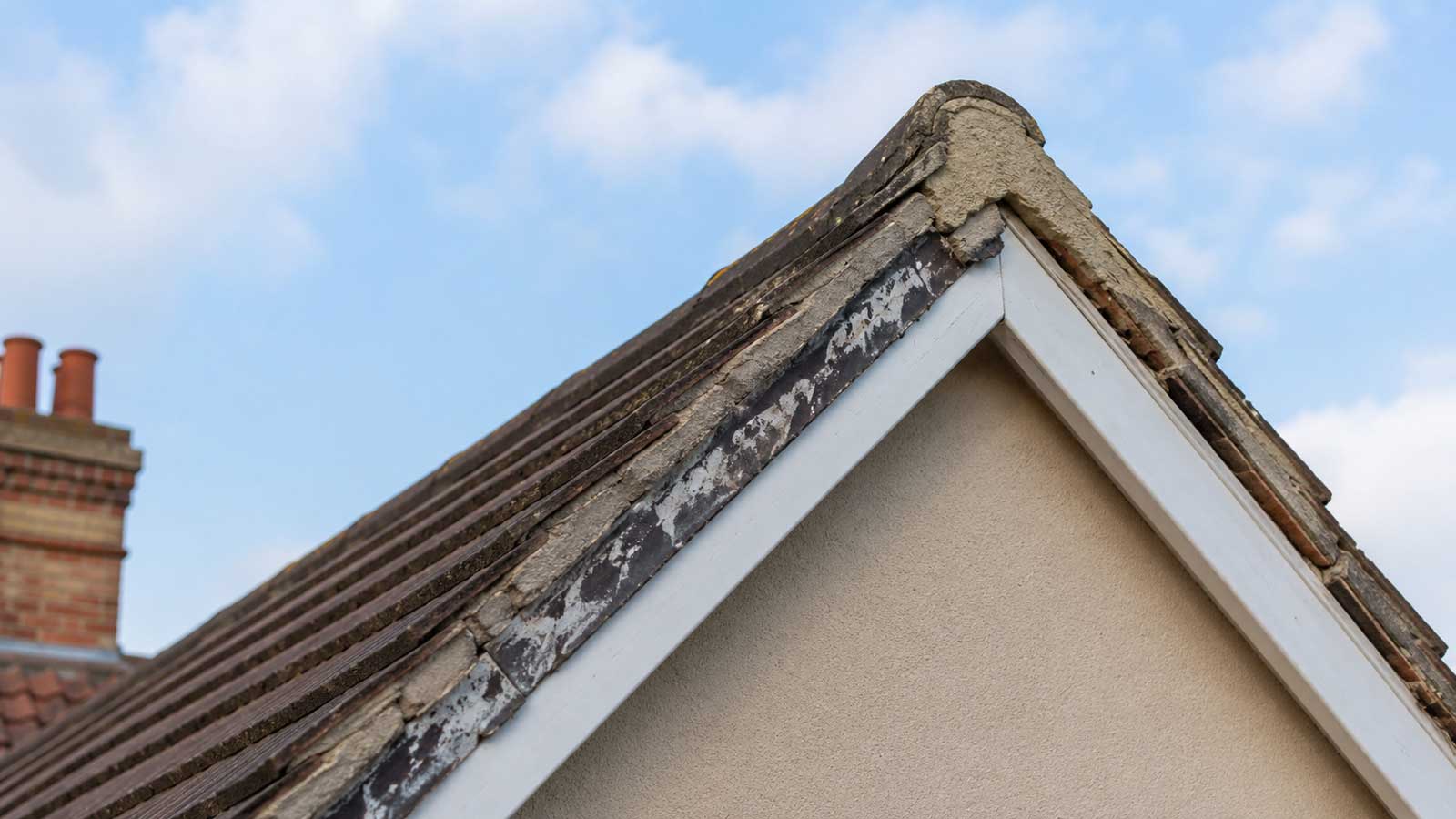
Mortared verges
Traditional verges often use mortar beneath the edge tiles. Cracks, gaps and missing sections can develop with weathering. If the mortar is loose, pressing fresh mortar over the face gives it little support.
Sound repair usually involves removing defective material and rebuilding the edge properly where needed.
Dry verge
Plastic or proprietary dry-verge systems are mechanically fixed. Missing caps, loose units or poorly aligned sections should be repaired using compatible components.
A row of units that has repeatedly worked loose may point to poor fixing rather than defective plastic.
Look at the gable wall
Open joints or cracks at the top of the masonry can sometimes be mistaken for a verge leak. Water may also track behind bargeboards on roofs that use them.
The edge should be inspected as a junction between roof covering and wall, not as a decorative strip on its own.
Wind loading
Verge tiles sit at an exposed edge and can be affected by wind uplift. After a storm, check for pieces sitting proud or mortar fragments below.
Any tile that looks unstable at height should be treated as a safety issue as well as a water-ingress problem.