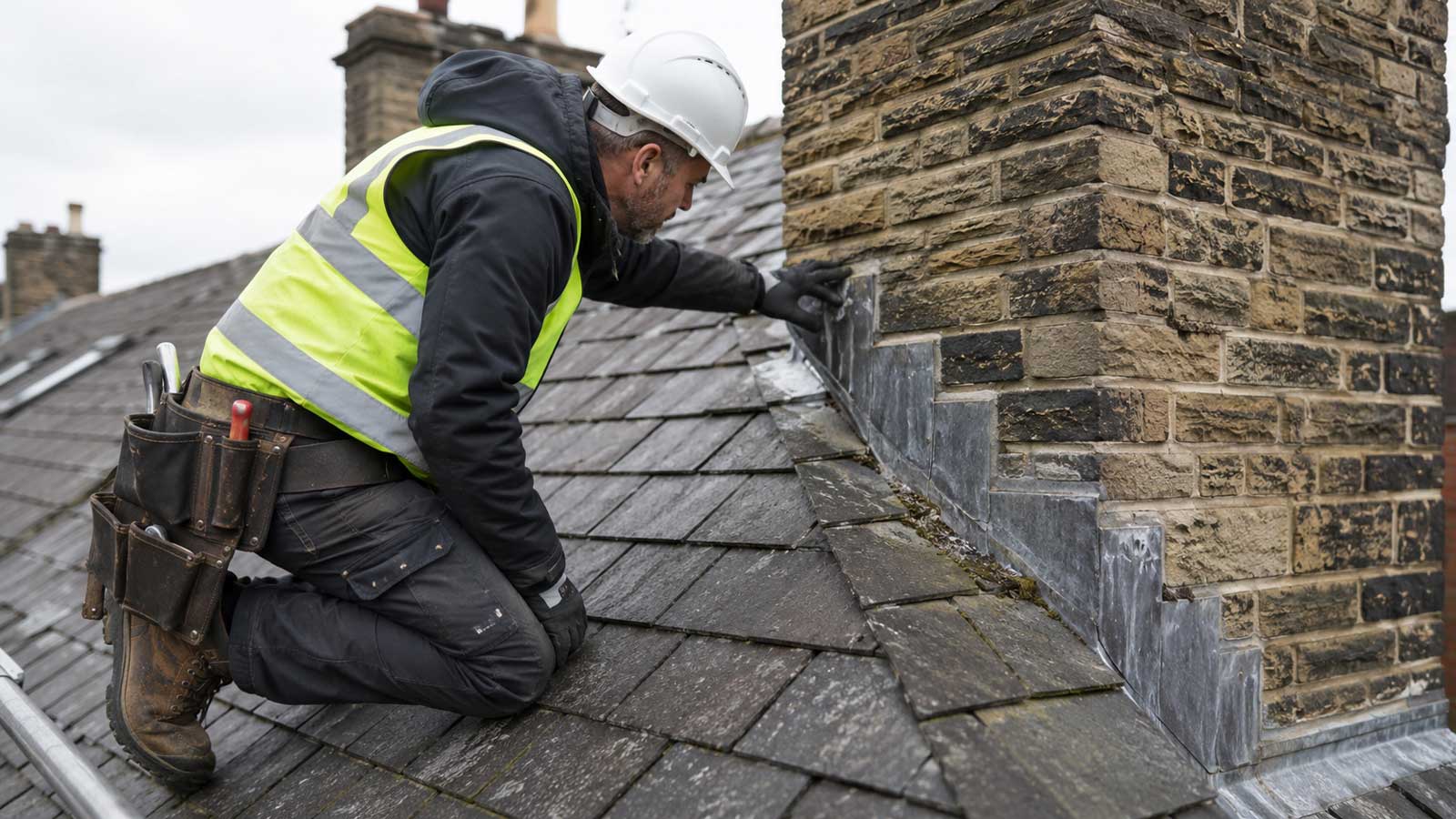
Look at shape and alignment
From the street or garden, scan the roof plane. Local dips, uneven courses, patched coverings and rooflines that change at an extension are worth asking about. Older terraces may have neighbouring roofs altered at different times.
A visual irregularity is not automatically structural. It is a reason to look more closely.
Inside the loft
If the loft is accessible during a proper survey, condition of rafters, underlay, insulation and chimney junctions provides valuable information. Fresh staining and dampness matter more than old dry marks.
Heavy stored belongings can hide areas that need inspection.
Previous alterations
Loft conversions, roof windows, solar panels and rear extensions add junctions and penetrations. Ask when they were installed and whether any leaks have occurred.
A neat room below does not reveal how the roof detail above was constructed.
Budget for access as well as repair
A high chimney or rear roof above a conservatory can be expensive to reach. If defects are reported, ask the surveyor or roofer what access is likely to be needed.
This is particularly useful when comparing the practical significance of several small defects in a survey report.