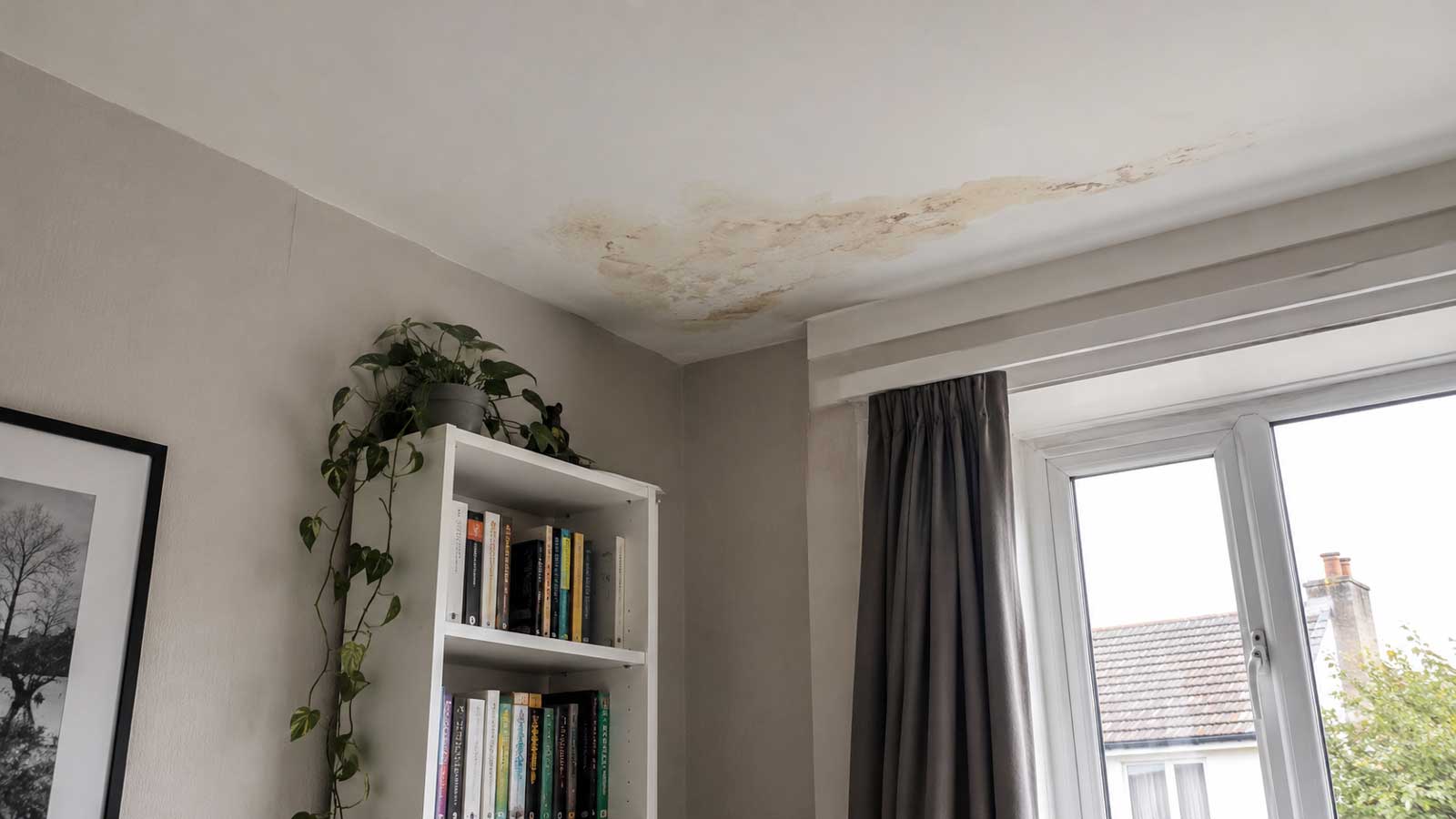
Start with the weather, not the plaster
A ceiling mark tells you where water finally became visible. It does not necessarily tell you where rain entered. On a pitched roof, water can run down the underside of felt, along a rafter, across the top of insulation or against a chimney breast before dropping into the room. I would first ask whether the mark appears during steady rain, wind-driven rain, thawing snow, or only after a long wet spell. That simple bit of history narrows the search more than poking at the ceiling.
If the leak is safe to look at from the loft, use a torch and inspect the timbers above and uphill from the mark. Dark staining, rusty nail points and wet felt can be more useful than the wettest patch of insulation.
What usually gets checked outside
The repair depends on the roof covering and the position of the leak. Around Blackburn there are plenty of older slate roofs as well as later tiled roofs, extensions and bay roofs. On slate, a cracked or slipped slate may be obvious from outside. Around chimneys, leadwork, mortar joints and the chimney itself all deserve a look. Valleys need checking along their whole run, not just at the bottom where water is seen.
A roofer should also look for small changes in level. A slate that has moved only a little can open a path for rain during windy weather while looking almost normal from the ground.
Photograph the area before work starts if you can do so from a safe position. It gives you something concrete to compare with the finished repair.
Do not seal the inside and call it repaired
Silicone, foam or roofing compound applied from the loft can stop a drip for a while, but it can also divert the water somewhere else. The roof covering is supposed to shed rain on its outer face. If the opening is above, deal with it above.
There are exceptions. A leaking pipe, a cold water tank, condensation on a duct or moisture around a bathroom fan can mimic a roof leak. If the roof is dry while the internal patch continues to worsen, those possibilities need checking before tiles are lifted.
Before a roofer arrives
Move anything vulnerable below the leak and put a container under an active drip. If you can do so without climbing or stretching, photograph the stain and note the weather when it appears. Do not go onto a wet roof yourself.
A few useful photographs from ground level can also help: the whole roof slope, chimney, valleys and any obvious displaced covering. They are not a substitute for an inspection, but they give the roofer a better starting point.
Need somebody to look at the roof?
If you want to ask local contractors about the repair, describe the symptom and include anything you have noticed about the weather or the part of the roof involved.
Request roofing quotesQuote requests are provided by MyJobQuote, an independent third-party service.